After-Ozymandias
The national debate over Confederate monuments has led many Americans to reconsider how historical figures are represented in public spaces. Monumental sculptures are typically constructed at one-third larger than life, elevated on pedestals, cast in bronze or carved from stone, and anchored firmly into the ground. These material decisions help sustain myths of permanence and immortality—yet today, many of these monuments are literally falling around us.
After-Ozymandias references Percy Shelley’s poem about the inevitable decline of empires and the vanity of their claims to greatness. “Ozymandias” is the Greek name for Pharaoh Ramesses II, who ruled Egypt in the thirteenth century. Shelley wrote the poem in 1817, shortly after the announcement that the British Museum had acquired a large fragment of Ramesses’s statue.
These photographs depict what remains after a monument collapses or is removed:empty plinths.

Richmond Virginia, 2020

Richmond Virginia, 2020

Richmond Virginia, 2020

Rome Georgia, 2018

Baltimore Maryland, 2017

Baltimore Maryland, 2017

Baltimore Maryland, 2017

Baltimore Maryland, 2017

New York City, NY, 2017

New York City, NY, 2017

Annapolis Maryland, 2017

New Orleans, Louisiana, 2018

New Orleans, Louisiana, 2018

Baltimore Maryland, 2017

Richmond Virginia, 2020

Richmond Virginia, 2020

Richmond Virginia, 2020

Richmond Virginia, 2020

Richmond Virginia, 2020
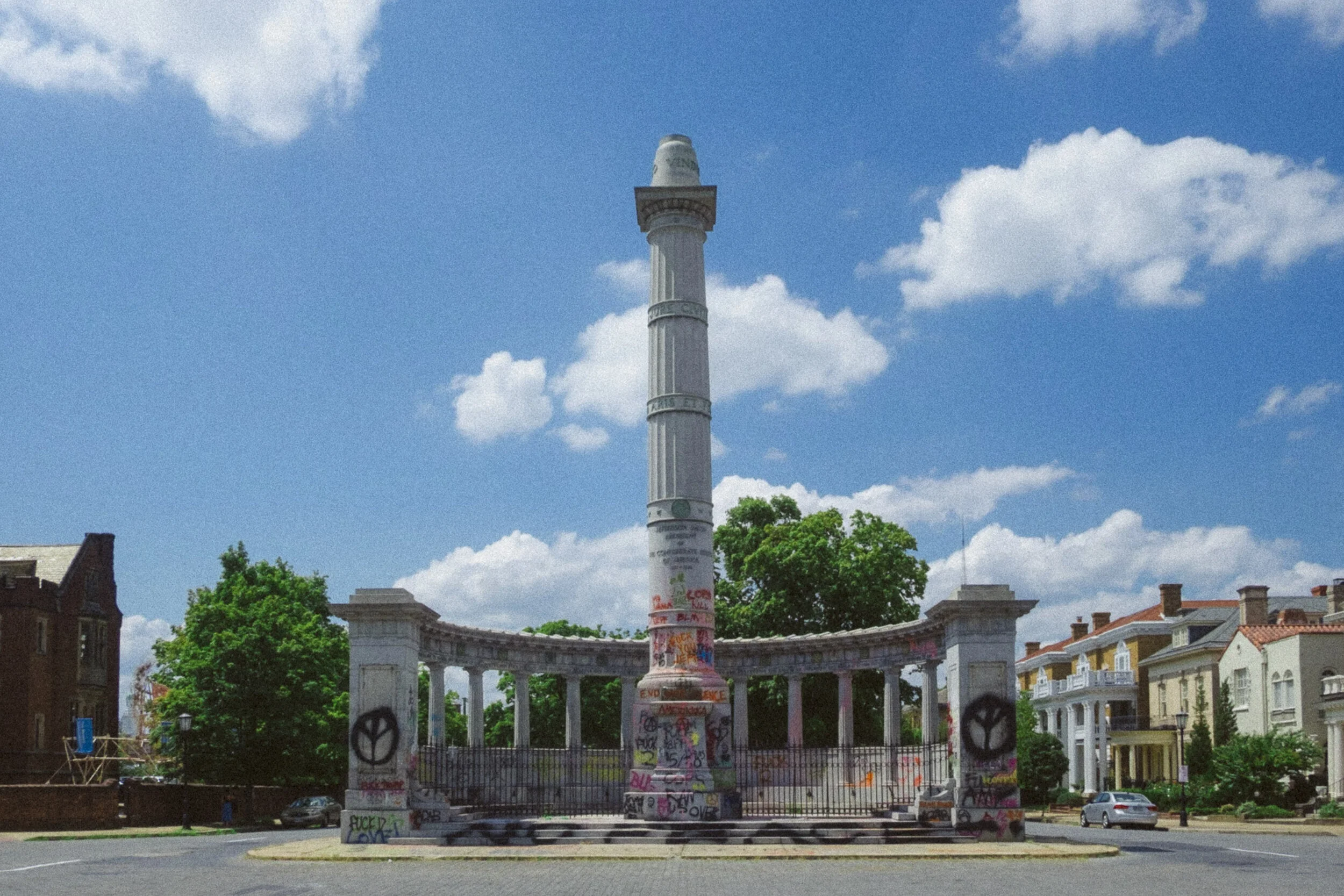
Richmond Virginia, 2020

Richmond Virginia, 2020

Richmond Virginia, 2020

Richmond Virginia, 2020

Richmond Virginia, 2020

Richmond Virginia, 2020

Duke University, Durham North Carolina 2020

North Carolina Capitol Building, (Women of the Confederacy), Raleigh 2020

North Carolina Capitol Building, (Confederate Monument), Raleigh 2020

(The Boys who Wore Gray) Durham Courthouse, North Carolina 2020

(Silent Sam) Chapel Hill, North Carolina 2020

McDonough Square, Georgia 2020

McDonough Square, Georgia 2020

McDonough Square, Georgia 2020

(Dekalb County Confederate Obilesque) Decatur, Georgia 2020